


How Kanban Complements Agile Workflows
In the world of project management and software development, Agile has become the gold standard for delivering high-quality products quickly and efficiently. While Agile frameworks, such as Scrum, emphasize iterative development and team collaboration, Kanban offers a flexible, visual approach that complements Agile workflows. Integrating Kanban into Agile practices can streamline operations, improve team collaboration, and boost overall productivity.
What is Kanban?
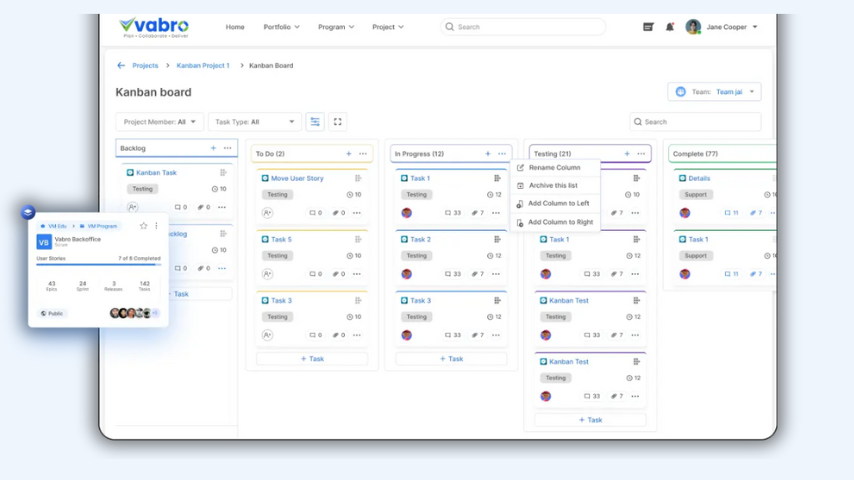
Kanban is a visual management method that enables teams to visualize their workflow, optimize tasks, and improve efficiency. Originating from the manufacturing industry, Kanban uses a board with columns representing various stages of work (e.g., "To Do," "In Progress," "Done") and cards that represent individual tasks. This visual representation helps teams identify bottlenecks, track progress, and ensure tasks are completed in a timely manner.
How Kanban Complements Agile Workflows
1. Enhanced Flexibility and Adaptability
While Agile methodologies like Scrum work in time-boxed iterations, Kanban introduces a continuous flow model. This allows teams to adapt to changes quickly, which is crucial in Agile environments. By using Kanban, teams can prioritize tasks dynamically and adjust to shifting project requirements without the constraints of fixed iterations. This flexibility ensures that Agile teams remain responsive to changes and customer feedback.
2. Visualizing Work for Improved Transparency
Agile emphasizes transparency and collaboration, and Kanban takes this a step further. By visualizing the flow of work on a Kanban board, everyone on the team gains a clear understanding of the current status of tasks. Whether it’s a developer, tester, or product owner, the board allows all team members to monitor progress at a glance. This visual tool helps identify bottlenecks and areas for improvement, which is key to delivering Agile projects on time.
3. Improved Workflow Management
Kanban’s key principle is the focus on flow. By limiting the work-in-progress (WIP) at each stage, Kanban ensures that the team is not overwhelmed and that tasks are completed efficiently. When applied to Agile workflows, this limitation helps prevent teams from overcommitting, which can lead to burnout and project delays. With Kanban, Agile teams can maintain a steady pace while keeping quality high and reducing waste.
4. Continuous Improvement and Faster Delivery
Both Kanban and Agile share a focus on continuous improvement. Kanban’s built-in feedback loop helps Agile teams make data-driven decisions about improving their processes. Teams can analyze lead times, cycle times, and other metrics to identify opportunities for process improvements. This feedback-driven approach ensures that Agile teams can deliver value more quickly and make incremental improvements over time.
5. Seamless Integration with Agile Methodologies
Kanban works seamlessly alongside Agile methodologies, enhancing the flexibility of frameworks like Scrum, XP (Extreme Programming), or Lean. While Scrum teams follow sprint cycles, Kanban can be used to manage the tasks within each sprint, ensuring a smooth flow of work. Agile teams can adopt Kanban principles without overhauling their existing frameworks, allowing for a hybrid approach that balances structure with flexibility.
Conclusion
Kanban and Agile workflows share common goals: delivering high-quality products quickly, improving team collaboration, and continuously refining processes. By integrating Kanban into an Agile environment, teams gain a powerful tool to visualize, manage, and improve their work. Whether you’re seeking to streamline workflows, adapt to changes more effectively, or boost transparency, Kanban is a valuable complement to any Agile methodology.
Incorporating Kanban with Agile workflows can elevate your team’s productivity, make project management more efficient, and ultimately lead to faster delivery and greater customer satisfaction.
